
Why Savyre
Hiring has changed.
Most hiring processes haven't.
Candidates learn with AI, build in IDEs, and prove skills in ways resumes never capture. Yet too many hiring decisions still run on keyword filters, gut feel, and unstructured interviews.
Savyre exists to help recruitment teams see what candidates can actually do before interview time is spent.
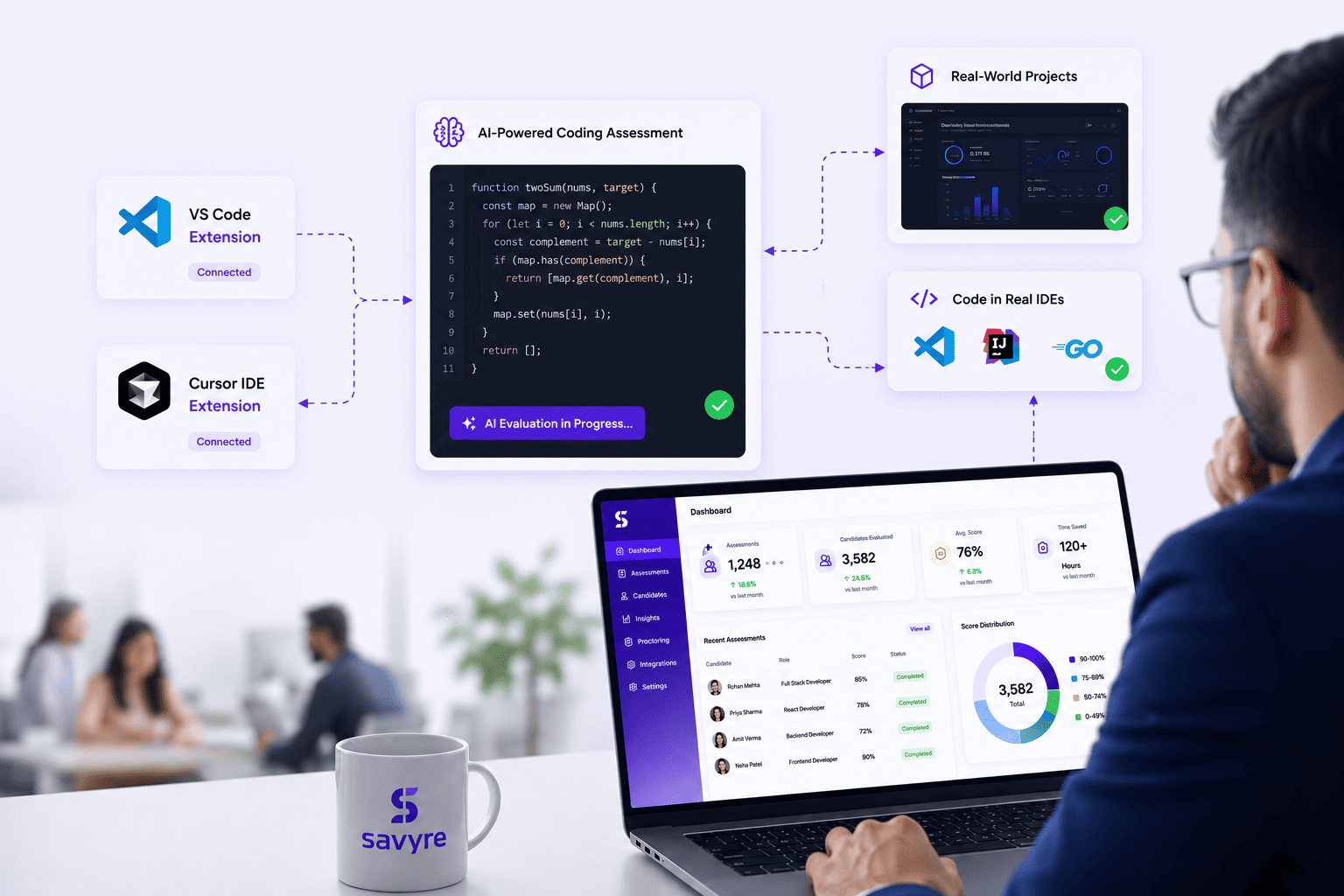
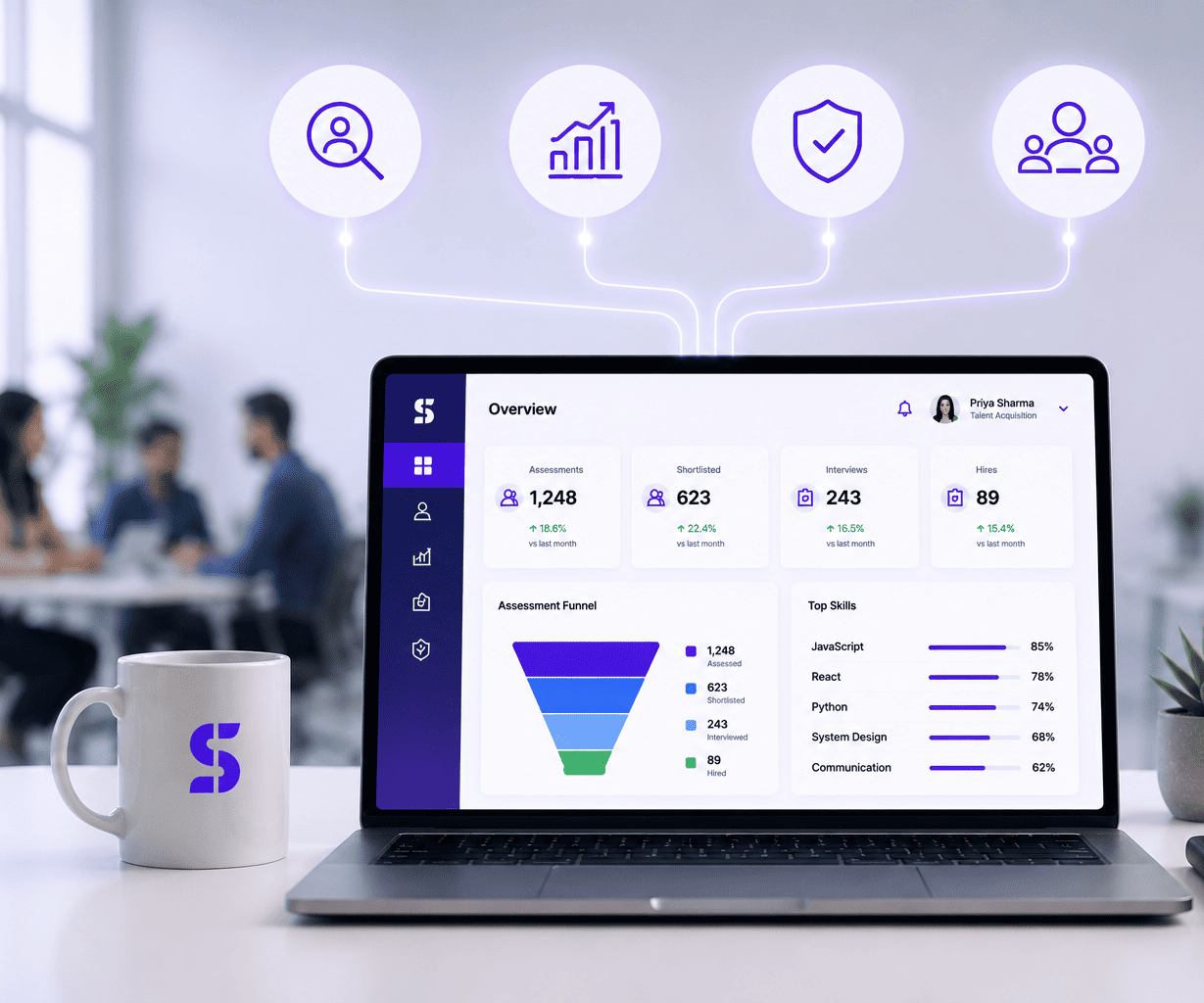
What we believe
We believe skills should speak louder than resumes
A resume describes history. A portfolio shows output. An interview reveals presence. None of these consistently prove whether someone can perform the work your role demands.
Practical evaluation
Assessments grounded in real tasks, not trivia or self-reported checkboxes.
Measurable performance
Structured signals recruiters and hiring managers can compare fairly.
Structured decisions
Evidence that teams can review, share, and defend together.
Recruitment teams need better evidence
The bottleneck is rarely candidate volume. It is knowing who deserves your attention.
- 1Shortlist faster with proof, not guesswork
- 2Reduce interview load on unqualified profiles
- 3Give hiring managers context they can trust
- 4Create a consistent bar across roles and recruiters
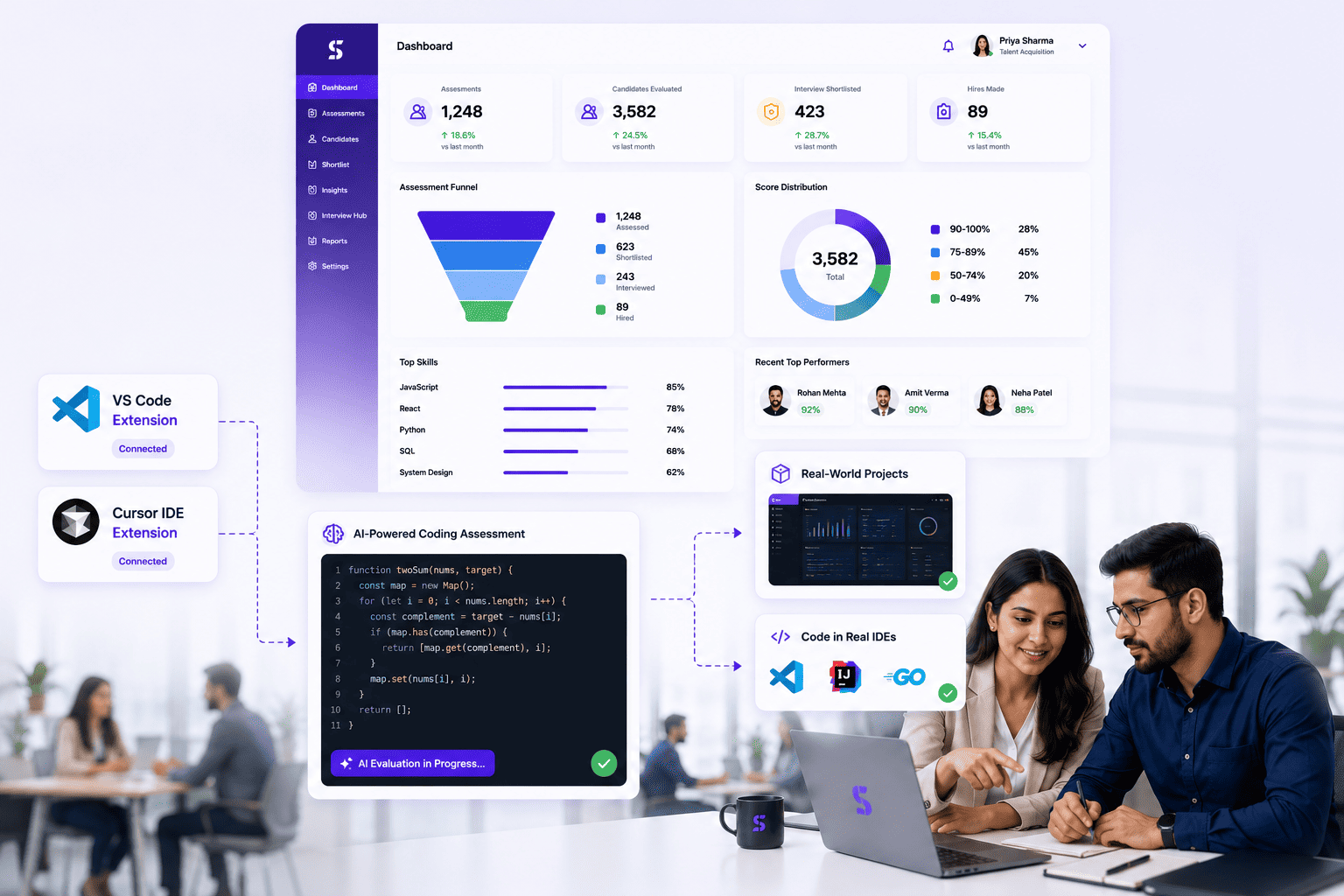
Built for recruiters, not just technical teams
Many assessment tools were designed by engineers for engineers. Savyre translates technical performance into hiring intelligence anyone on your team can use.
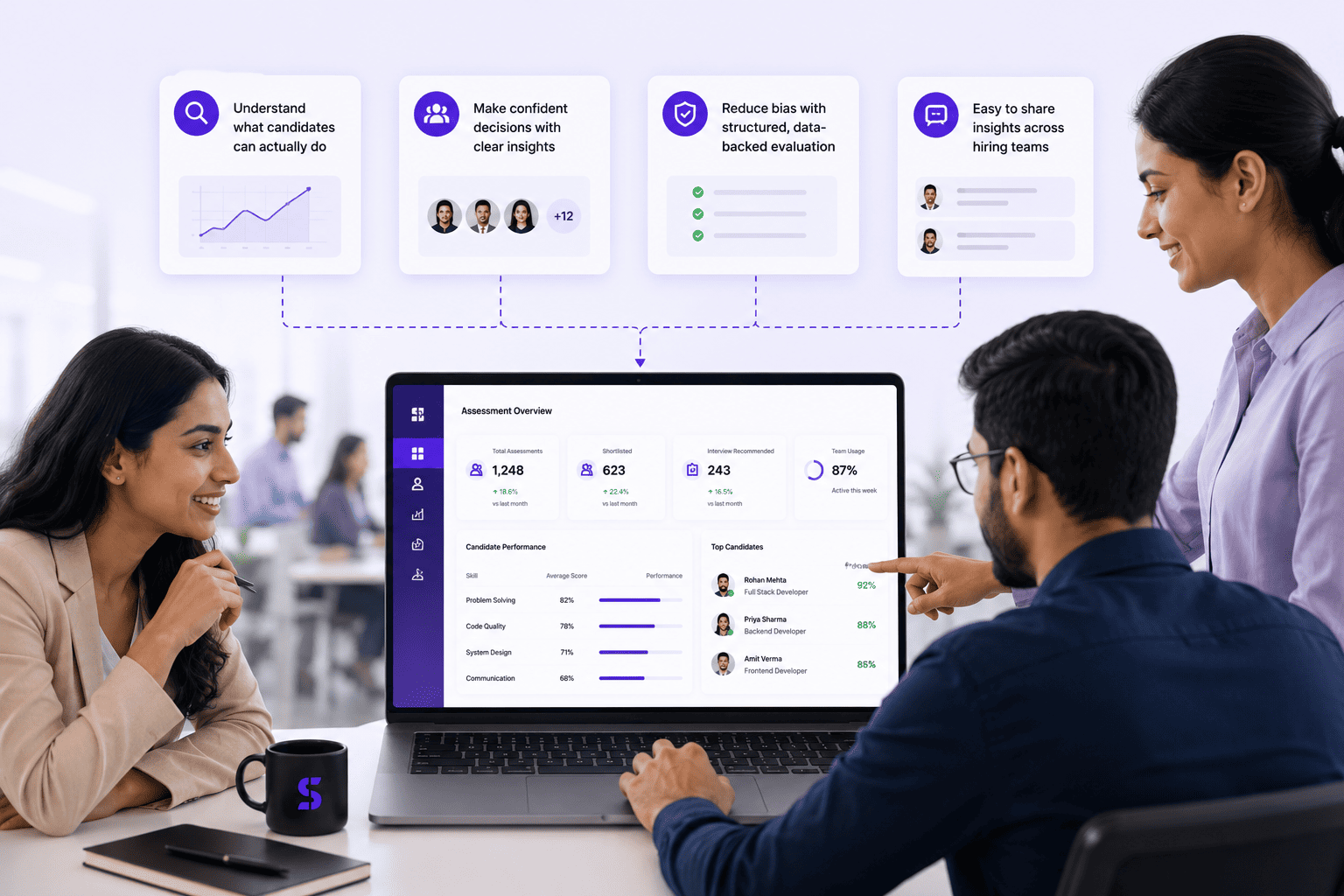
Recruitment agencies
Submit candidates with evidence clients can understand and trust.
Staffing firms
Pre-screen at scale without sacrificing quality or speed.
Hiring managers
Walk into interviews with clarity on capability, not just conversation.
Talent acquisition
Standardize evaluation across roles, regions, and hiring campaigns.
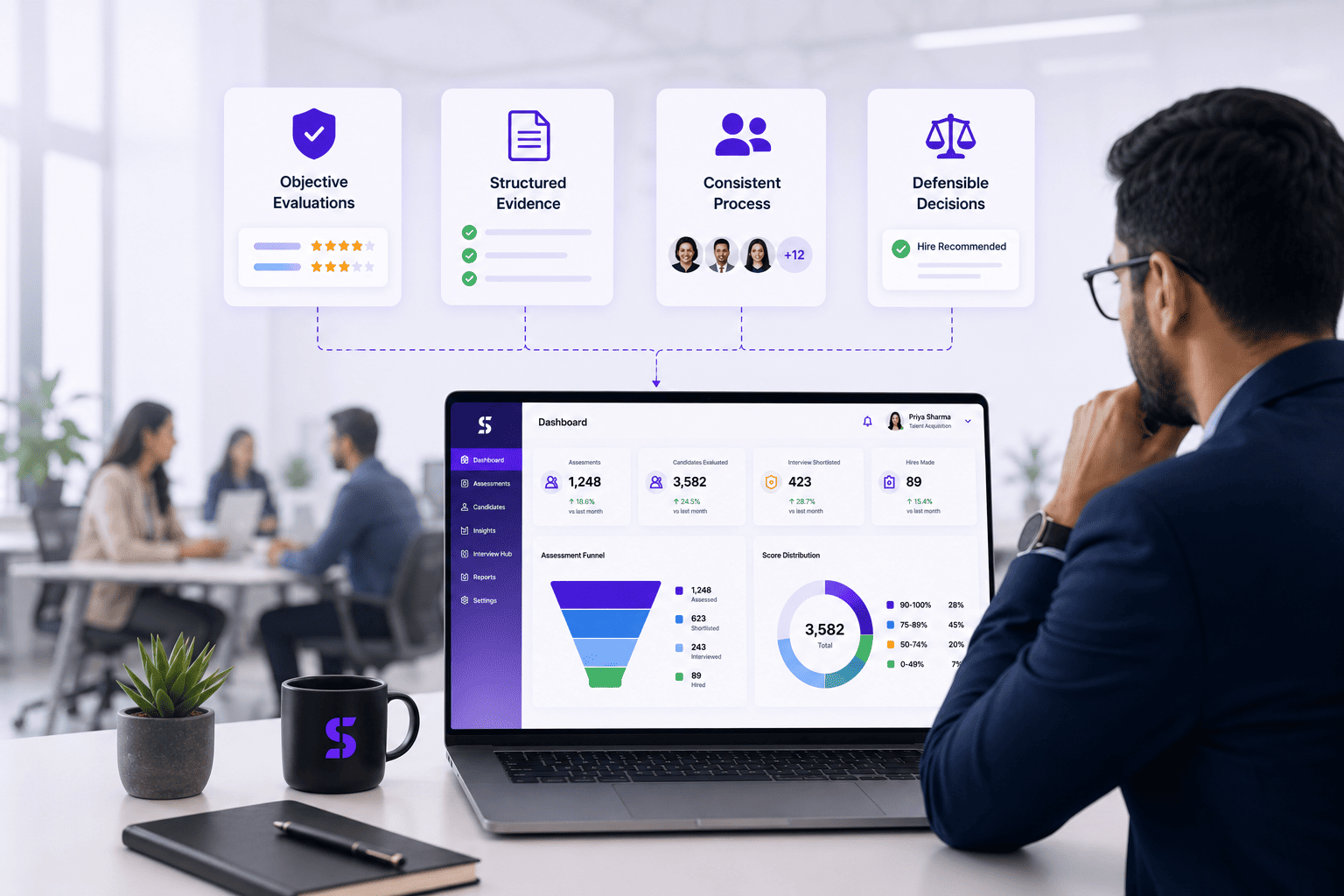
Hiring should be defensible
Every hire shapes team performance, budget, and momentum. When you move forward with a candidate, you should be able to explain why with confidence. Savyre helps organizations build a repeatable, transparent evaluation process that stands up to scrutiny.
Our mission
“To help organizations make hiring decisions based on demonstrated capability rather than assumptions, bias, or incomplete information.”
 Install VS Code Extension
 Install Cursor Extension